

Dh Linkers
Do you own a company which ships consumer commodity products? Do you mail holiday or birthday presents? Do you sell products online on e-commerce sites? Do you ship packages via transportation companies such as FedEx? If the answer is yes, then you must determine if the products you are shipping are dangerous goods before you ship them.
Dangerous Goods (DG) are articles or substances capable of posing a risk to health, safety, property, or the environment when transported by air or ground. DG are sometimes referred to as Hazardous Materials.
More than 3 billion tons of regulated DG - including explosive, toxic, corrosive, flammable, and radioactive materials - are transported in the United States each year. Over 300,000 tons of these DG shipments are transported by air.
Before offering a package containing DG to an air carrier for transportation, DG regulations require you, the shipper, to correctly prepare shipments in compliance with all applicable DG regulations. Required elements of correctly prepared DG shipments include accurate classification, proper identification, use of compliant packaging / specific packaging (which is tested to withstand conditions typically encountered during air transportation), and all applicable marking and labeling requirements.
Correctly identifying a DG commodity and preparing it for air transport as required by all applicable DG regulations is crucial to ensuring DG shipments move safely through the FedEx air network. DG marks, labels, and shipping papers such as the Shipper’s Declaration for Dangerous Goods form, are all essential components of safe transportation. The visual marks and labels (identifying the potential hazards of a shipment) and shipping papers assist in determining the proper handling and segregation of DG shipments required during transportation. This information is also used to communicate potential hazards on board the aircraft to the flight crew in case of emergency.
Failure to ensure DG shipments are prepared in accordance with all applicable DG regulations and FedEx operator variations can lead to damages to equipment, aircraft, trucks, including potential injuries or death.
All shipments offered to the FedEx air network must be prepared in accordance with the International Civil Aviation Organization (ICAO) Technical Instructions for The Safe Transport of DG by Air, International Air Transport Association (IATA) DGR, applicable State (Country) and FedEx variations. This is required regardless of the possible routing and whether the shipment is physically shipped by air transportation, ground transportation or a combination of both
Non-compliant DG shipments are shipments which do not comply with all required DG regulations and operator variations. When a shipper offers a shipment to FedEx for transport, FedEx checks the shipment for compliance. If errors are found, the shipment is rejected. It is the shipper’s responsibility to correct any non-compliance before re-offering the shipment.

Sometimes customers may offer shipments not declared as containing DG, but the package has one or more visual clues which indicates the shipment could contain DG.
Certain GHS labels (see page 3)
DG handling label (see page 4)
Obsolete ORM-D mark (see page 5)
Ground Limited Quantity Mark (see page 6)
Partially covered or obscured hazard class labels
These types of non-compliant shipments are subject to rejection even when the shipment does not contain DG. In some cases, these types of shipments must also be reported to the Department of Transportation (DOT). These types of visual clues on packages must be removed or corrected prior to offering the package for transportation.


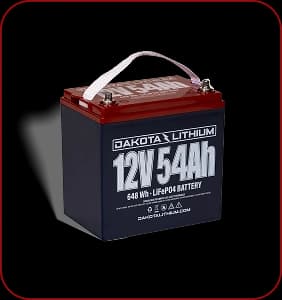







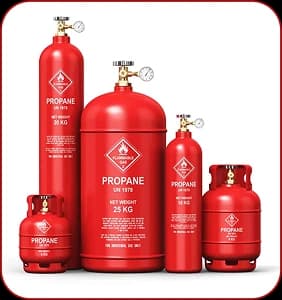


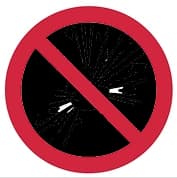




The corrosive GHS symbol MAY indicate the presence of DG. The shipper should consult the Safety Data Sheet (SDS), normally found in Section 14 to see if it also meets the definition of a corrosive for transportation.
The shipper must verify the accuracy of information contained in section 14 by validating the other elements contained within the SDS. Shippers should not rely solely on section 14 as being the correct DG classification for the purpose of shipping.

These two GHS labels communicate health hazards but do not usually represent DG. The shipper should consult the SDS.


Be aware of Hazard and Handling Labels. These all indicate a shipment contains DG.
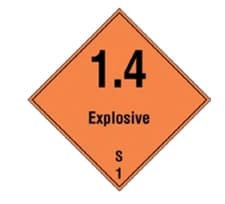

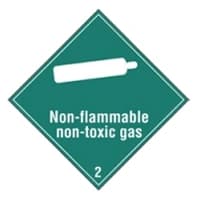
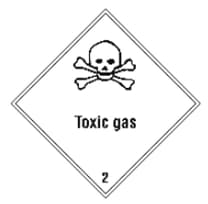
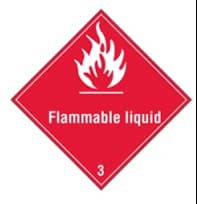



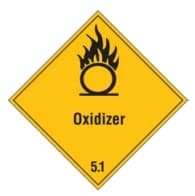
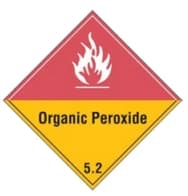
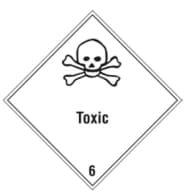

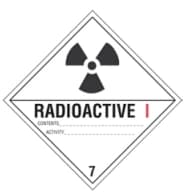
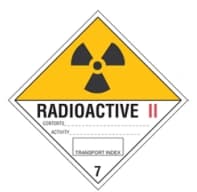
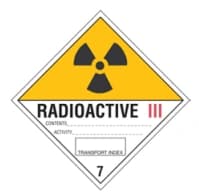
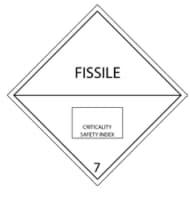

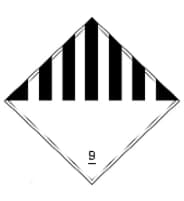
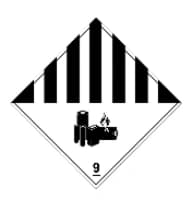




Per IATA 7.1.5.3 the Environmentally Hazardous Substance Mark is not required on single packages and combination packages prepared in accordance with Special Provision A197. Therefore, when it appears this is a clue to the carrier that it may be an improperly prepared DG shipment unless there is some indication of A197 in combination with this mark.
Customers that are shipping a product that they received, such as a return of an item ordered, should be aware of all the markings and labels on the product and outermost package.
Any of the following clues on the outermost package may indicate the contents are DG that may be regulated and not accepted for FedEx Air Service shipping:

The ORM-D mark is
now obsolete in
49CFR regulations.

* Multi-modal shipments refer to those shipments that require multiple modes of transportation such as air cargo freight as well as a truck carrier

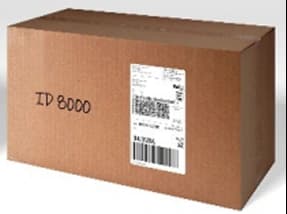
The presence of a UN or ID number followed by a four digit number indicates the presence of DG and might be regulated.
If you are returning a product to a retailer, check all sides of the package. If there are any DG marks, DG labels, or DG paperwork such as the Shipper’s Declaration for Dangerous Goods form, these are clues that the package contents are DG. Comply with all IATA DG regulations to properly prepare the shipment.
Check each side of your package to ensure all DG marks, labels and paperwork have been removed before re-using a package for a nonhazardous item. For a nonhazardous item, DG marks, labels and paperwork would not be applicable and are not allowed to be shown. If your new contents are not DG e.g., re-using a box to ship books or clothes, remove DG marks/labels/paperwork.
Reminder: DG marks may be visible in the form of a label, handwritten on the package or be embossed on the package. A most common DG mark is the Limited Quantity mark (either Ground (surface) or air version

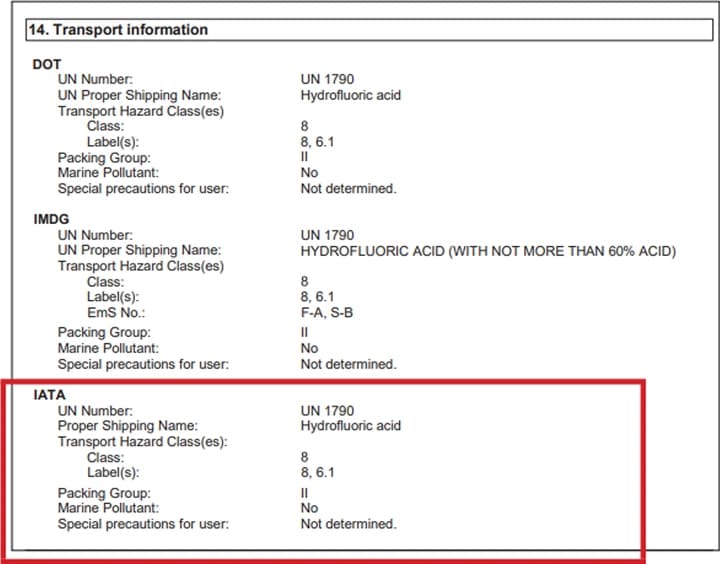
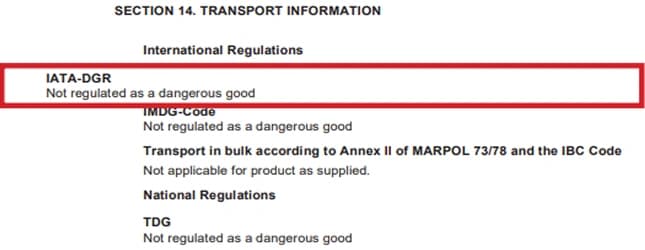
As the shipper you are ultimately responsible for determining if the package contains DG and to follow all the applicable IATA/ICAO DG regulations when shipping with DH Linker. This includes the proper identification, classification, packaging, DG marks and labels, and the Shipper’s Declaration for Dangerous Goods form. Although the information in Section 14 is a good starting point, it’s possible that errors may appear on a manufacturer’s SDS in Section 14 so always review all the data in the SDS in its entirety. The shipper must verify the accuracy of information contained in section 14 by validating the other elements contained within the SDS. Shippers should not rely solely on section 14 as being the correct DG classification for the purpose of shipping.
DG on a paper airbill showing “Yes” as per associated shipper’s declaration or Dry Ice “Yes”; the presence of a DG handling code such as “ADG”, “IDG” or “ICE”. This indicates that you selected DG or dry ice in the automation device.
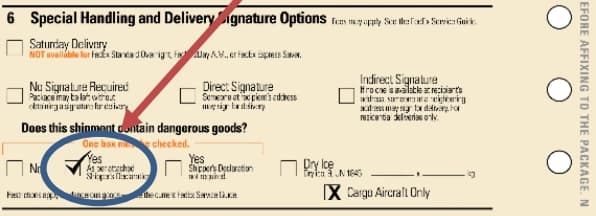
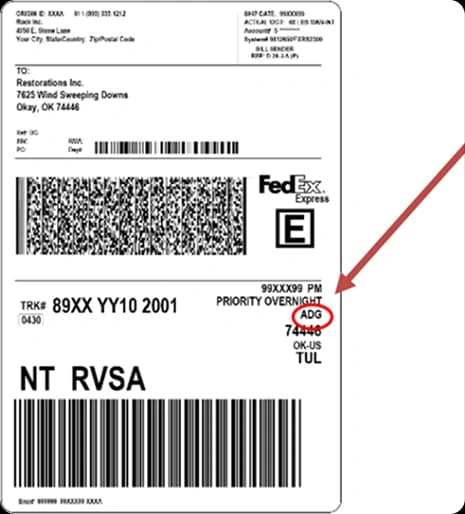
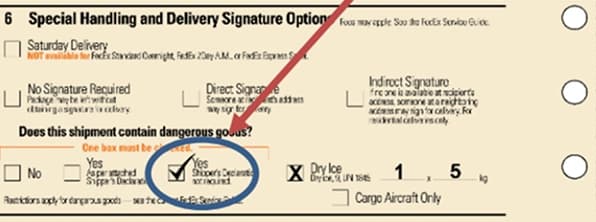
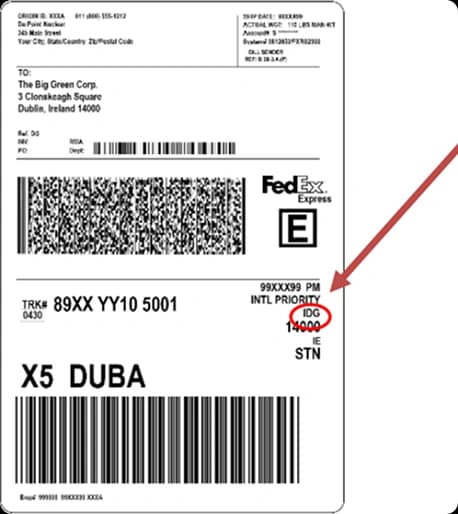
Alternatively, if you are not shipping DG, these indications should not be indicated on the paperwork.
IMPROPERLY PREPARED LITHIUM BATTERY SHIPMENTS: SECTION II – UN3090, UN3480
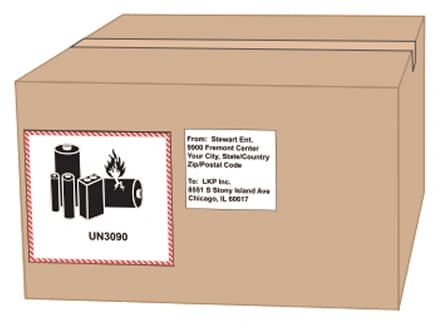
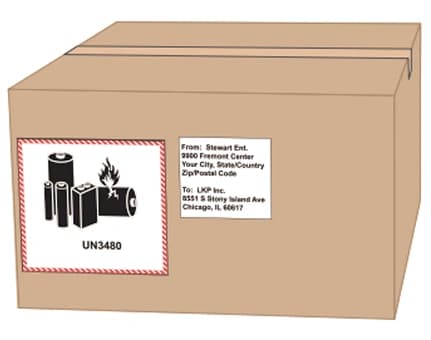
AUN 3090 and UN 3480 must be offered as a fully regulated Section IB (or IA) per the IATA DG regulations. Regardless of the Watt hours or gram amount in the batteries, it cannot be offered as a Section II.
Every shipment offered on a DH Linkers service must be prepared and offered under the IATA/ICAO DG regulations.
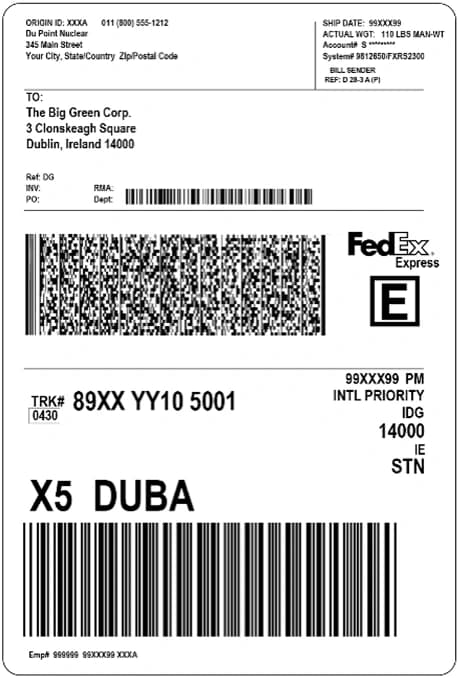
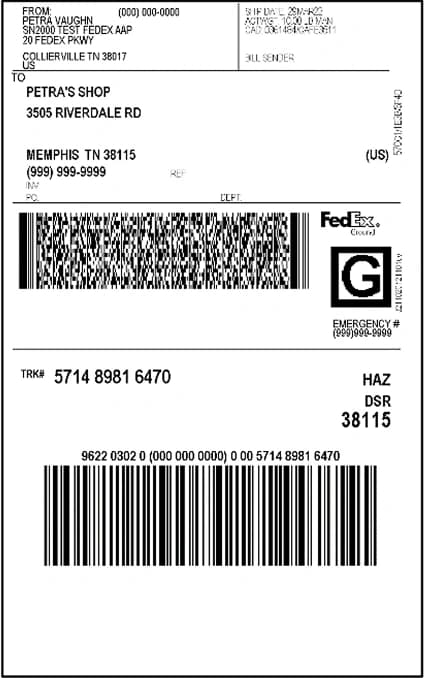
When using an approved automation system and the destination zip code is within the United States and an DH Linker Air service is used, the automation label will list an E in a rectangle to indicate an DH Linker Air Service. In contrast, if offered as a Ground service, the automation label will list a G in a rectangle. See shipping label examples below:
This Ground (Surface) Limited Quantity package mark is not allowed by itself on an Air shipment with DH Linker Air Service. * DH Linker IATA shipments offered as Limited Quantity require a (Y prefix Packing Instruction), Y symbol in the center of the mark. Additionally, the Shipper’s Declaration for Dangerous Goods form, a hazard label, and all required DG marks (UN or ID number, Proper Shipping Name etc.), and any required DG handling labels are also required on the air Limited Quantity package.
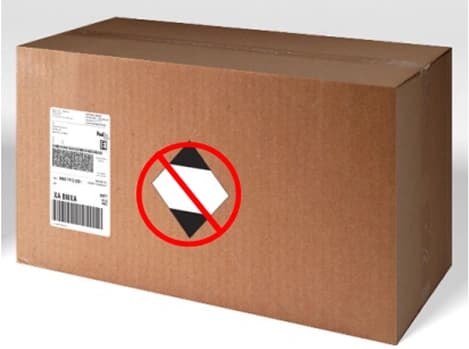
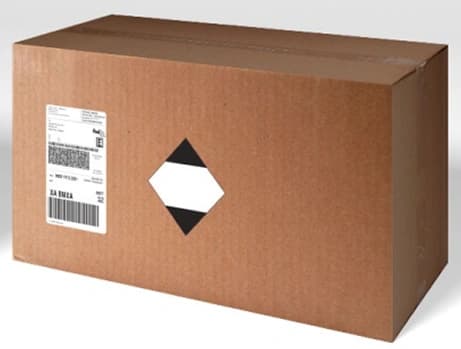
* Exception: US FedEx Extra Hours service
There are some limited exceptions for shipments which are accepted under 49CFR as prepared by air outlined in the 2026 IATA FX variation FX 02-(f).”
Copyright @ 2026 All rights reserved